
 30-10-2026
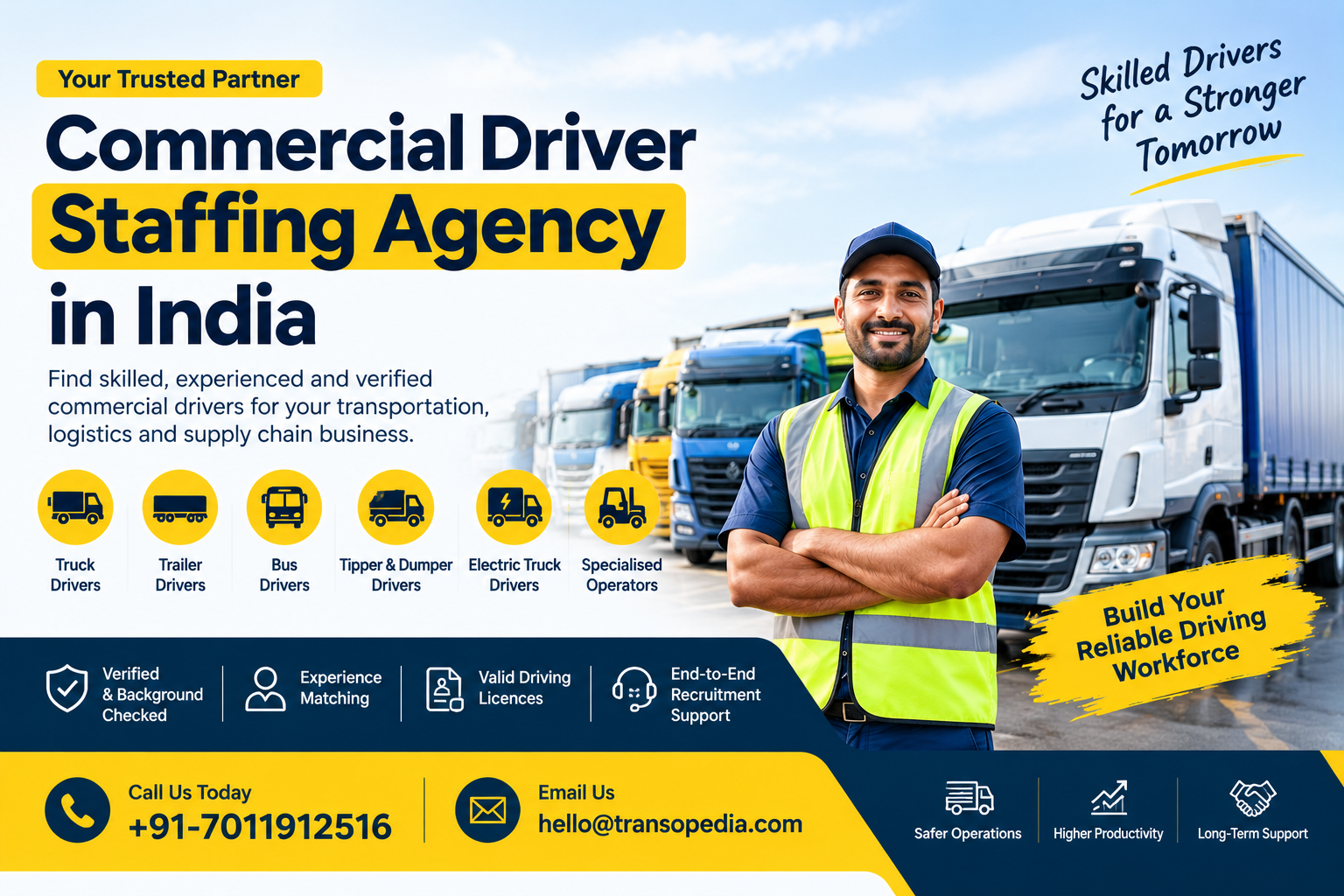
Commercial Driver Staffing Agency in India
Commercial Driver Staffing Agency in India
Finding reliable and experienced commercial drivers is e...
Read More →
The technology team behind Transopedia. We build websites, mobile apps, driver management systems, CRMs and more.
Visit sonpra.com
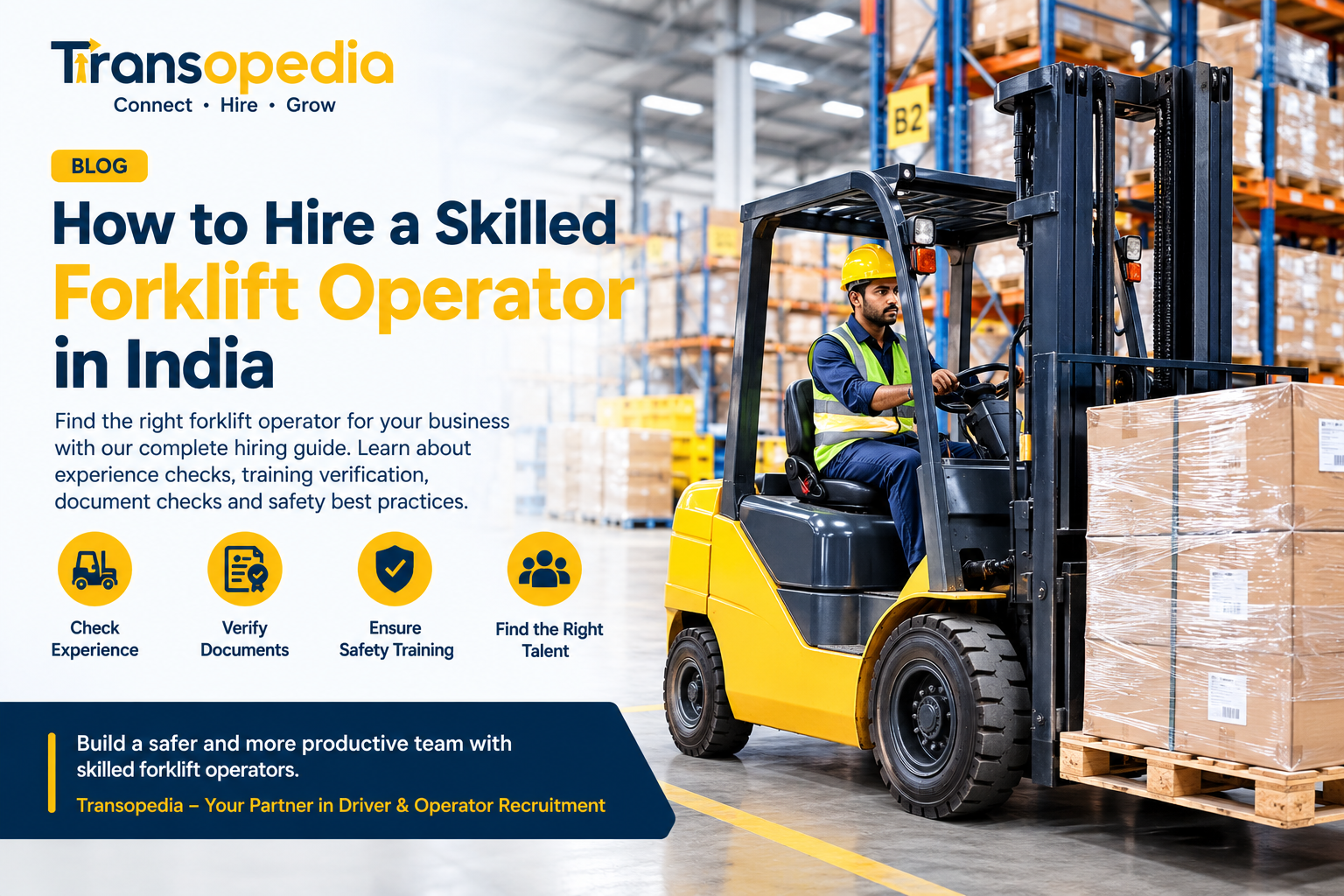
Hiring a skilled forklift operator is essential for businesses that handle goods, materials, and heavy loads. Warehouses, manufacturing units, logistics companies, distribution centres, construction sites, and industrial facilities rely on forklift operators to move materials safely and efficiently.
Finding the right forklift operator can help improve productivity, minimise material-handling errors, and maintain workplace safety. However, businesses should evaluate more than just a candidate’s experience before making a hiring decision.
In this guide, we explain how to hire a skilled forklift operator in India, verify qualifications, assess practical skills, and find suitable candidates for your business.
Before starting the recruitment process, identify your operational requirements. Forklift operators may work in warehouses, factories, logistics hubs, ports, and construction environments, each with different responsibilities.
Consider the following factors:
Forklift type: Determine whether you need an operator for an electric forklift, diesel forklift, LPG forklift, reach truck, or another material-handling machine.
Work location: Specify the warehouse, factory, industrial site, or project location.
Experience level: Decide whether you need an experienced forklift operator or a candidate with suitable training and supervised practical experience.
Working hours: Clarify shift timings, overtime requirements, and weekly holidays.
Salary and benefits: Establish a suitable salary based on the operator’s experience, location, equipment type, and responsibilities.
Clearly defining these requirements will help you shortlist candidates who match your business needs.
Practical experience is one of the most important factors when hiring a forklift operator. The candidate should understand the equipment and demonstrate the ability to handle materials safely in the intended working environment.
Look for experience in:
Loading and unloading goods from trucks and containers.
Moving materials between storage areas and loading bays.
Stacking and retrieving pallets at appropriate heights.
Operating the relevant forklift type and attachments.
Understanding load capacity, load stability, and equipment limitations.
Performing routine pre-operation inspections.
Ask candidates about their previous employers, the equipment they have operated, and the types of materials they have handled.
Where appropriate, arrange a practical skills assessment under qualified supervision before finalising the recruitment decision.
Document verification is an important step in forklift operator recruitment. The documents and authorisations required may vary depending on the equipment, workplace, employer, and applicable regulations.
Before hiring, review the candidate’s identity documents, employment history, relevant training certificates, and any licences or authorisations required for the role.
Confirm that the operator has received appropriate training for the equipment they will use. Where necessary, verify certificates with the issuing organisation and check employment references.
Do not assume that previous experience alone proves current competence. The operator should meet your company’s training, safety, and site-access requirements before beginning work.
Forklifts operate around pedestrians, racks, vehicles, and valuable inventory. Incorrect operation can result in serious injuries, damaged goods, and workplace disruptions.
During the interview, ask candidates how they would handle situations such as unstable loads, restricted visibility, narrow aisles, pedestrian crossings, or uneven surfaces.
A suitable forklift operator should understand the importance of:
Inspecting the forklift before use.
Following the manufacturer's operating instructions.
Checking load limits and maintaining load stability.
Observing speed limits and designated traffic routes.
Keeping pedestrians clear of operating areas.
Parking the equipment safely and reporting defects.
Ensure that the operator understands your workplace safety procedures and completes any required site induction before starting work.
Finding experienced forklift operators through informal contacts alone can take time, particularly when businesses need multiple operators or urgent staffing support.
Businesses can explore employee referrals, recruitment agencies, local operator networks, job portals, and specialised recruitment platforms.
Transopedia helps businesses connect with commercial drivers and explore recruitment opportunities through its online platform. Businesses seeking forklift operators can use suitable recruitment channels to identify potential candidates and discuss their skills, experience, availability, and employment requirements.
Always verify candidate details and assess practical competence before confirming a hiring decision.
Clear communication about employment conditions can reduce recruitment delays and help prevent candidates from declining offers at the last moment.
Discuss the expected salary, work location, shift timings, overtime, weekly holidays, accommodation, transportation, and other applicable benefits.
Confirm the candidate’s availability and expected joining date. If the job involves night shifts or working at a remote industrial location, communicate these requirements before making an offer.
Agreeing on these details early helps both the employer and candidate understand the expectations.
Before assigning a forklift operator to a warehouse, factory, or industrial facility, complete the required recruitment and safety checks.
Verify relevant documents, review work experience, confirm training, and arrange a practical assessment where appropriate. Ensure the operator understands the equipment, workplace procedures, emergency protocols, and reporting responsibilities.
Maintain records of completed checks, training, and site induction according to your organisation’s procedures.
Hiring a skilled forklift operator in India requires a structured approach that combines experience verification, technical assessment, document checks, and workplace safety evaluation.
By defining your requirements, checking relevant skills, communicating employment terms clearly, and selecting suitable recruitment channels, your business can improve its chances of finding the right operator.
If your business needs help sourcing commercial drivers or exploring recruitment opportunities, visit Transopedia to discover recruitment solutions for India’s transport and commercial vehicle industry.
The latest information about transports and packers movers in India
30-10-2026
Finding reliable and experienced commercial drivers is e...
Read More →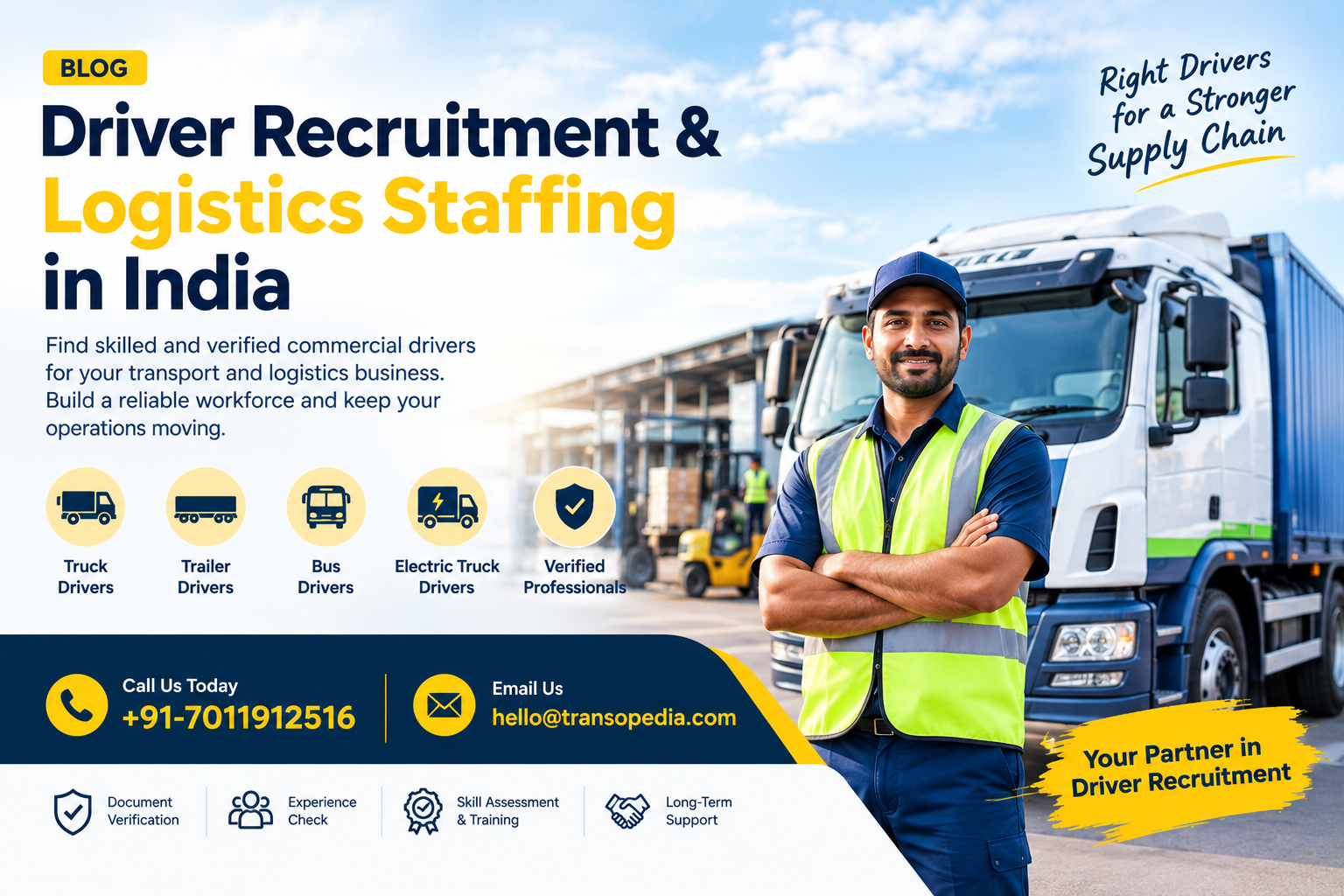 30-10-2026
India's transportation and logistics industry plays a vital role in supporting busi...
Read More → 29-10-2026
The adoption of electric trucks is growing in India as logistics companies, fleet operat...
Read More →