
 30-10-2026
Commercial Driver Staffing Agency in India
Commercial Driver Staffing Agency in India
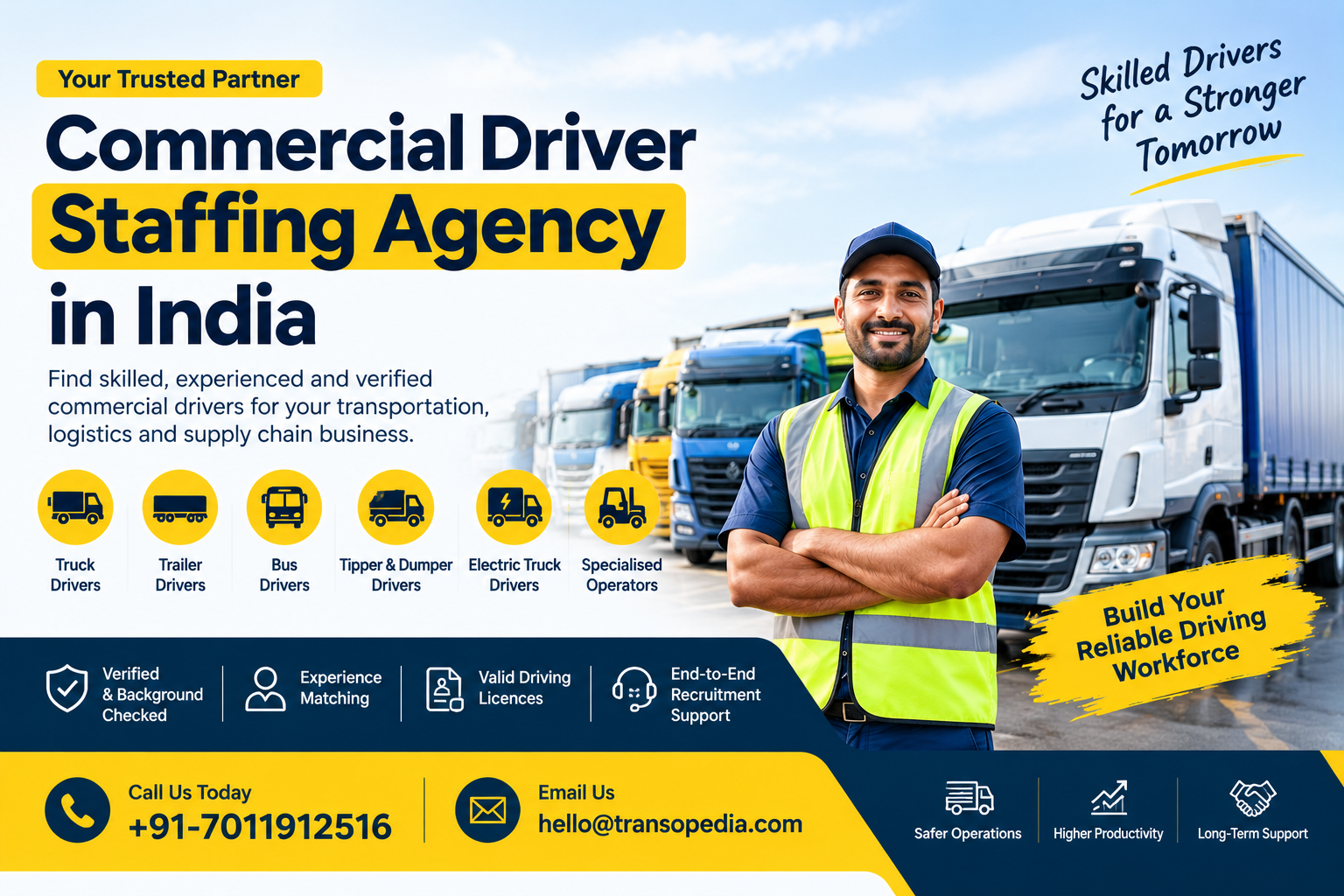
Finding reliable and experienced commercial drivers is e...
Read More →
The technology team behind Transopedia. We build websites, mobile apps, driver management systems, CRMs and more.
Visit sonpra.com
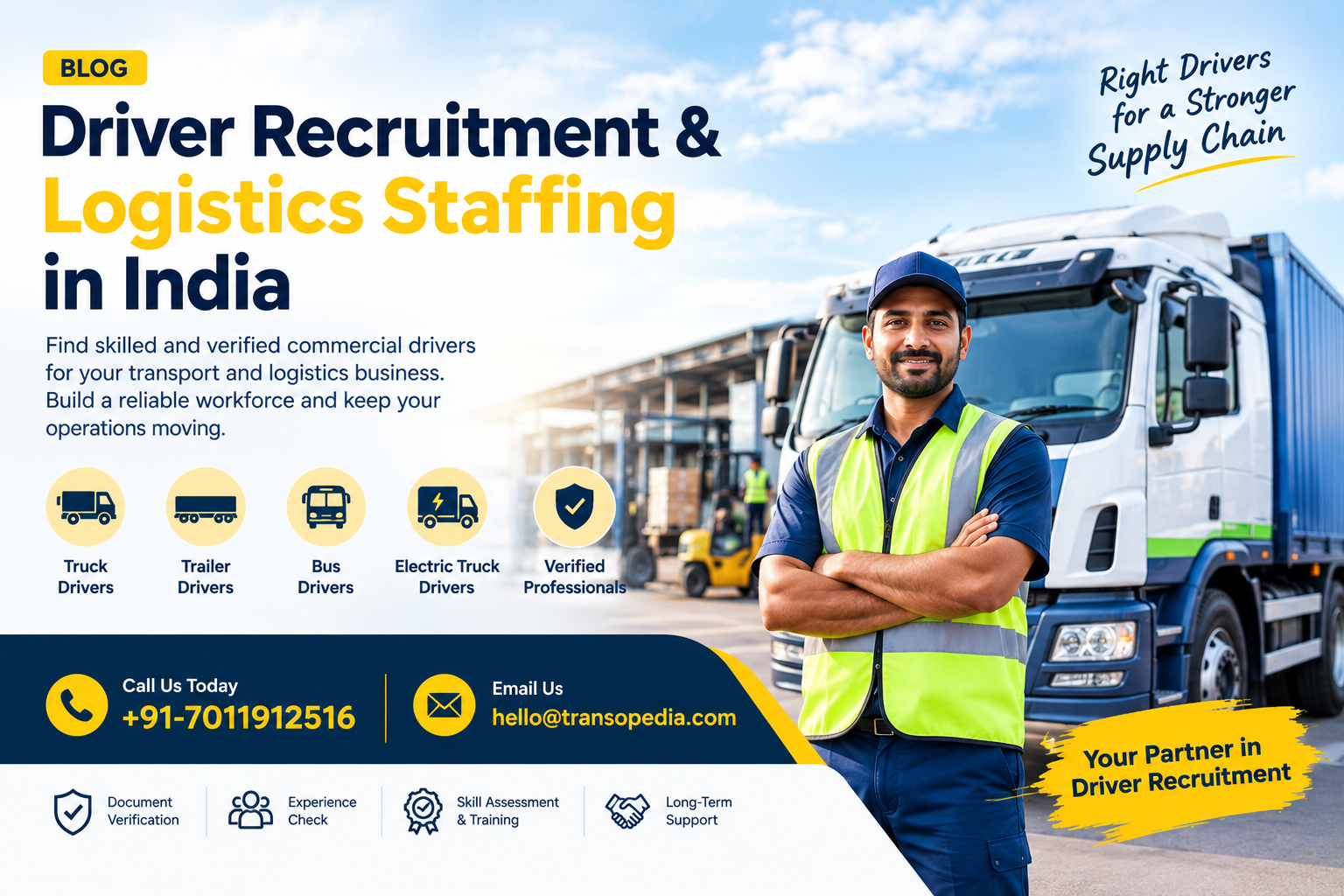
India's transportation and logistics industry plays a vital role in supporting businesses, supply chains, manufacturing, e-commerce, and infrastructure development. As businesses expand their transportation operations, the demand for experienced commercial drivers continues to grow. Finding reliable drivers at the right time is essential for maintaining delivery schedules, managing fleet operations, and meeting customer expectations.
Driver recruitment and logistics staffing in India have therefore become important priorities for transport companies, fleet owners, logistics providers, construction businesses, and organisations operating commercial vehicles.
Whether you need truck drivers, trailer drivers, bus drivers, electric truck drivers, or specialised vehicle operators, having a structured recruitment process can help you find suitable candidates for your operational requirements.
Commercial drivers are essential to the movement of goods and people across India. A shortage of qualified drivers can affect delivery schedules, increase vehicle downtime, and create additional pressure on existing employees.
An effective driver recruitment strategy helps businesses identify candidates with suitable driving experience, valid licences, and the skills required for specific vehicles.
Professional recruitment processes can also help businesses manage urgent staffing requirements, expand their fleets, and reduce the time spent searching for drivers through informal networks.
For logistics companies, having access to a dependable pool of potential drivers supports business continuity and helps maintain efficient transportation operations.
Different industries require drivers with different skills and experience levels. Identifying your requirements before starting recruitment can improve candidate selection.
Common commercial driver categories include:
Truck drivers: Transport goods between warehouses, distribution centres, factories, and customer locations.
Trailer drivers: Operate suitable heavy commercial vehicles for transporting containers, machinery, and oversized cargo.
Bus drivers: Support passenger transportation for schools, companies, travel operators, and other organisations.
Tipper and dumper drivers: Support construction, mining, infrastructure, and material transportation activities.
Electric truck drivers: Operate electric commercial vehicles while following appropriate driving, charging, and battery safety procedures.
Specialised vehicle operators: Operate equipment such as forklifts, boom lifts, and other machinery when appropriately trained and authorised.
Clearly defining the vehicle category, work location, experience requirements, and joining date helps businesses identify suitable candidates more efficiently.
Recruiting commercial drivers can be challenging, especially when businesses need several drivers across multiple locations.
Some common challenges include finding experienced candidates, verifying driving licences, checking employment history, managing urgent joining requirements, and coordinating interviews.
Last-minute cancellations and differences between salary expectations and job offers can also delay recruitment.
Businesses can address these challenges by maintaining clear job descriptions, communicating employment conditions early, verifying candidate information, and using appropriate recruitment platforms.
A consistent hiring process can help reduce unnecessary delays and improve the overall candidate experience.
Driver verification is an important part of commercial driver recruitment. Before assigning a driver to a vehicle, businesses should check the documents and qualifications relevant to the role.
Important checks include:
Confirming identity and relevant personal documents.
Verifying that the driving licence is valid for the required vehicle class.
Reviewing previous driving experience and employment history.
Checking references where appropriate.
Assessing knowledge of road safety and vehicle operating procedures.
Confirming that the candidate meets the employer's requirements.
For specialised vehicles, businesses should also verify relevant training and equipment-specific competence.
Verification should be completed before deployment, and any additional requirements should be assessed according to applicable regulations and company policies.
Finding the right candidates through personal contacts alone can be time-consuming, particularly when a business needs drivers urgently or operates across several locations.
Transopedia provides an online platform where businesses can explore commercial driver recruitment opportunities and connect with potential candidates.
Whether you need truck drivers, trailer drivers, bus drivers, or other commercial driving professionals, defining your requirements clearly can help you identify candidates who better match your operational needs.
Looking for commercial drivers for your business?
Contact Transopedia to discuss your recruitment requirements.
Phone: +91-7011912516
Email: [email protected]
Our team can discuss your requirements and help you explore suitable recruitment options.
Businesses can make logistics staffing more efficient by providing complete information when requesting drivers.
Include the vehicle type, number of drivers required, job location, salary, accommodation arrangements, working hours, and expected joining date.
Also explain whether the role involves local deliveries, interstate transportation, long-distance routes, night shifts, or specialised operations.
Clear information helps candidates understand the job before applying and allows employers to assess suitability more effectively.
Businesses should also maintain records of recruitment progress, candidate verification, joining status, and replacement requirements where applicable.
Successful logistics operations depend on more than filling immediate vacancies. Businesses should focus on building a dependable workforce through fair employment practices, appropriate training, clear communication, and regular performance reviews.
Providing suitable working conditions, timely salary payments, and clear policies can help improve driver retention.
Businesses should also plan recruitment according to fleet expansion, seasonal demand, new contracts, and changing transportation requirements.
A proactive approach to driver recruitment and logistics staffing can help organisations respond to operational changes while maintaining consistent service quality.
Driver recruitment and logistics staffing in India are essential for businesses that depend on commercial transportation. From truck and trailer drivers to bus and electric truck drivers, finding suitable candidates requires clear job requirements, document verification, experience checks, and effective recruitment channels.
By adopting a structured hiring process, businesses can improve recruitment efficiency, reduce avoidable delays, and build a reliable driving workforce.
Need commercial drivers for your fleet or logistics business?
Contact Transopedia to discuss your driver recruitment requirements.
Call: +91-7011912516
Email: [email protected]
Website: https://www.transopedia.in
Transopedia — Your Partner in Driver Recruitment.
The latest information about transports and packers movers in India
30-10-2026
Finding reliable and experienced commercial drivers is e...
Read More →
30-10-2026
India's transportation and logistics industry plays a vital role in supporting busi...
Read More →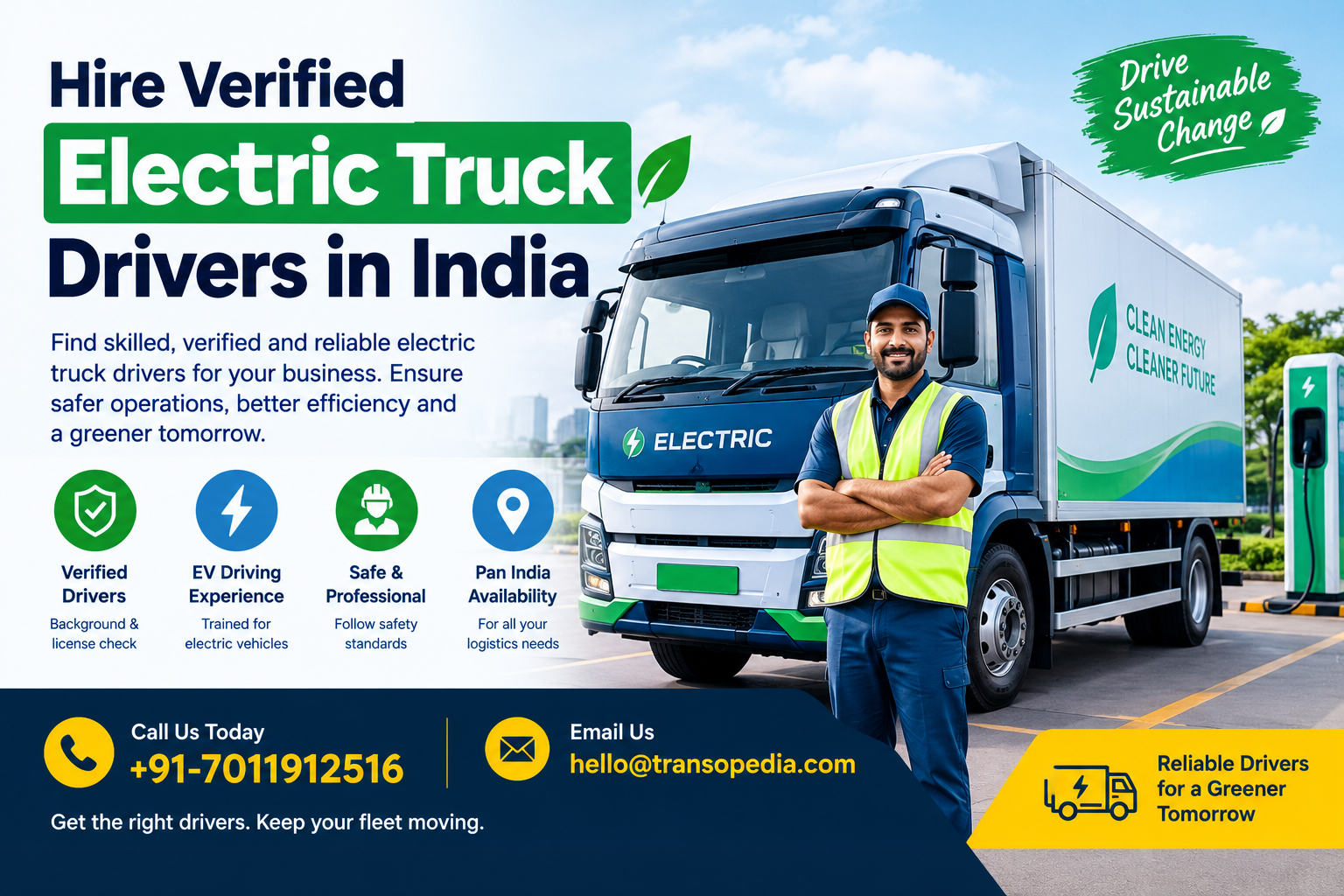 29-10-2026
The adoption of electric trucks is growing in India as logistics companies, fleet operat...
Read More →