
 30-10-2026
Commercial Driver Staffing Agency in India
Commercial Driver Staffing Agency in India
Finding reliable and experienced commercial drivers is e...
Read More →
The technology team behind Transopedia. We build websites, mobile apps, driver management systems, CRMs and more.
Visit sonpra.com
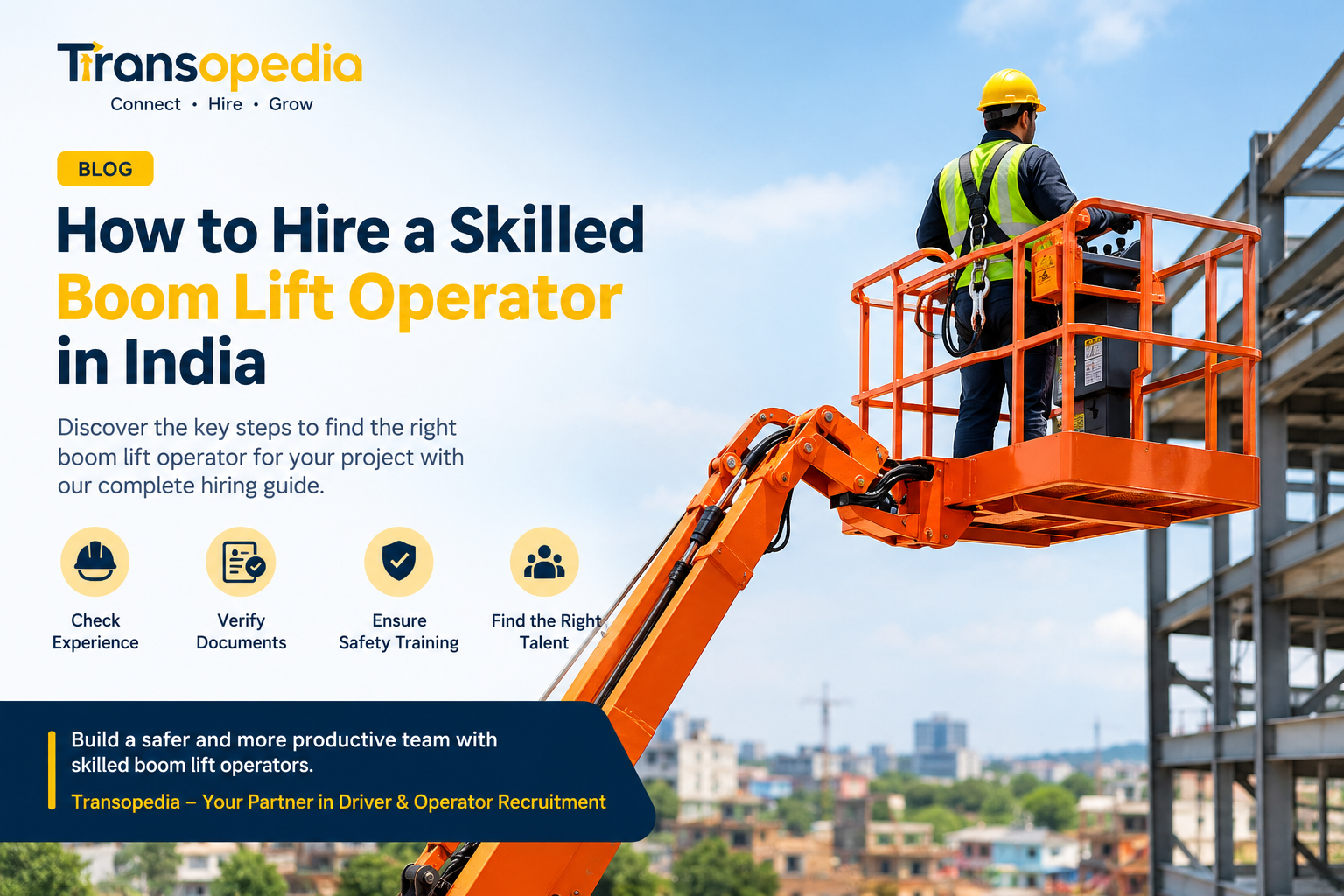
Hiring a skilled boom lift operator is essential for construction companies, industrial facilities, infrastructure projects, and equipment rental businesses. Boom lifts are widely used to perform work at height, including building maintenance, installation, painting, electrical work, and construction activities. Operating this equipment requires practical experience, safety awareness, and appropriate training.
Finding the right boom lift operator can help businesses improve productivity, reduce operational risks, and maintain workplace safety. In this guide, we explain how to hire a skilled boom lift operator in India and what to check before making a hiring decision.
Before starting the recruitment process, identify your project's specific requirements. Different projects may require operators with different levels of experience and equipment knowledge.
Consider the following factors:
Equipment type: Determine whether you need an operator for an articulating boom lift, telescopic boom lift, or another type of aerial work platform.
Project location: Specify the city, worksite, and expected joining date.
Experience: Decide whether you need an experienced boom lift operator or can consider candidates with appropriate entry-level training.
Work schedule: Clarify working hours, shift requirements, and overtime expectations.
Salary and benefits: Establish a competitive salary based on experience, location, and job responsibilities.
Clearly defining these requirements will help you find suitable candidates and reduce recruitment delays.
When hiring a boom lift operator, practical experience should be one of your main considerations. Candidates should understand the equipment they will operate and the conditions in which it will be used.
Look for candidates who can demonstrate:
Experience operating the relevant boom lift model or equipment category.
Knowledge of equipment controls and operating procedures.
Awareness of load limits, platform capacity, and stability requirements.
Understanding of workplace hazards and site safety rules.
Ability to perform pre-operation inspections and identify potential equipment issues.
Familiarity with working around buildings, machinery, workers, and other obstacles.
Ask candidates about their previous projects and the types of boom lifts they have operated. Where possible, arrange a practical assessment conducted by a qualified supervisor.
Document verification is an important part of boom lift operator recruitment. Requirements can vary depending on the equipment, employer, worksite, and applicable regulations.
Before hiring, review the candidate's identity documents, employment history, training certificates, and any relevant licences or authorisations required for the role.
You should also confirm that the operator has received appropriate training for the equipment and understands the safety procedures applicable to your site.
Do not assume that experience alone establishes competence. Verify documents with the issuing organisation where appropriate, and ensure that the candidate meets your project's safety requirements.
Boom lifts are used for work at height, where unsafe operation can cause serious injuries or equipment damage. Safety awareness should therefore be a priority when selecting an operator.
During the interview, ask candidates how they would respond to common workplace situations, such as uneven ground, strong winds, overhead obstructions, equipment alarms, or an emergency involving a raised platform.
A suitable operator should understand the importance of:
Conducting pre-use equipment inspections.
Following the manufacturer's operating instructions.
Wearing the required personal protective equipment.
Checking ground conditions and surrounding hazards.
Following site-specific emergency and rescue procedures.
Reporting equipment defects rather than continuing unsafe operations.
Ensure that the operator's training and competence match the equipment and working conditions involved.
Finding qualified equipment operators through informal contacts alone can be time-consuming, especially when multiple workers are required across different project locations.
Businesses can explore several recruitment channels, including referrals, specialist recruitment agencies, local operator networks, and online recruitment platforms.
Transopedia helps businesses connect with commercial drivers and explore recruitment opportunities through its online platform. Businesses looking for equipment operators can use relevant recruitment channels to identify potential candidates and discuss their experience, availability, and suitability for specific projects.
When using any recruitment platform, verify candidate information and assess technical competence before confirming employment.
Recruitment becomes more efficient when the employment terms are clear from the beginning.
Discuss the expected salary, accommodation arrangements where applicable, transportation, working hours, weekly holidays, overtime, and other employment conditions.
Confirm the candidate's availability and expected joining date. If the project is located away from the operator's home, explain the site location and any facilities provided by the employer.
Transparent communication helps avoid misunderstandings and reduces the likelihood of candidates declining the offer at the last moment.
Before assigning an operator to a project, confirm that all required documents have been checked and that the candidate meets the project's technical and safety requirements.
Where appropriate, arrange a practical skills assessment under qualified supervision. Verify references when necessary and explain the company's operating procedures, reporting structure, and safety expectations.
Maintain a record of the recruitment checks and any training or site induction completed before the operator begins work.
Hiring a skilled boom lift operator in India requires more than finding someone who has previously operated lifting equipment. Businesses should assess practical experience, verify relevant documents and training, evaluate safety awareness, and clearly communicate employment terms.
By following a structured recruitment process, construction companies, industrial businesses, and equipment rental providers can improve their chances of finding suitable operators for their projects.
If your business needs help sourcing commercial drivers or exploring recruitment opportunities, visit Transopedia to discover driver recruitment solutions for India's transport and commercial vehicle industry.
Visit https://app.transopedia.com/ to explore driver recruitment opportunities and find a suitable approach for your hiring needs.
The latest information about transports and packers movers in India
30-10-2026
Finding reliable and experienced commercial drivers is e...
Read More → 30-10-2026
India's transportation and logistics industry plays a vital role in supporting busi...
Read More → 29-10-2026
The adoption of electric trucks is growing in India as logistics companies, fleet operat...
Read More →